

We are on whatsapp/ viber- text/ call us on +91 8939792782 /+971 504602676

Get a Free Estimate or Second Opinion within 48 hours
All About
Artificial Disc Lumbar Replacement
Symptoms
Back pain caused by one or two problematic intervertebral disks in the lumbar spine
- No significant facet joint disease or bony compression on spinal nerves
- Body size that is not excessively overweight
- No prior major surgery on the lumbar spine
- No deformity of the spine (scoliosis )
Causes
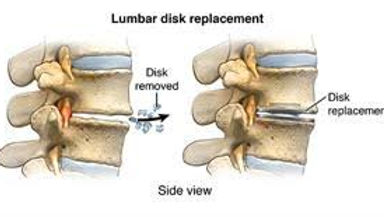
In artificial disk replacement, worn or damaged disk material between the small bones in the spine (vertebrae) is removed and replaced with a synthetic or "artificial" disk. The goal of the procedure is to relieve back pain while maintaining more normal motion than is allowed with some other procedures, such as spinal fusion.
More about Treatment
While many patients are helped by lumbar fusion, the results of the surgery can vary. In addition, some patients whose fusion surgeries heal perfectly still end up with no improvement of their back pain.
Some doctors believe that the failure to improve after fusion surgery is due to the fact that fusion prevents normal motion in the spine. For this reason, artificial disk replacement—which aims to preserve normal motion—has emerged as an alternative treatment option for low back pain.
Artificial disk replacement initially gained FDA approval for use in the U.S. in 2004. Over the past several years, numerous disk replacement designs have been developed and are currently being tested.
FAQ on this Treatment
When can I return to work after this procedure?
Recovery varies from type of work involved.People involved in light activities can return to their work in a week without any opioids. But work involving strenuous activities will require 6 weeks or more to recover.
What activities are advised after this treatment?
Back support with Taylor's or ASH's brace
Gradual walking in 3-4 days.
Around 4 weeks physiotherapy may be started for neck strenght,flexibility as a part of recovery and to reduce pain.
Vigorous activities to be started after 6-12weeks.
What activities should be avoided after this procedure?
Vigorous activities involving spine in the recovery period.
Hyperextension of neck
What are complications that can arise from this treatment?
Preoperative Complications: Nausea, Anxiety
Intraoperative complications: Injury to major vessel,nerve leading to haemorrhage and numbness or paralysis,Injury to spinal cord and dura leakage
Incision related problem, Anasthesia related allergy and problems
Postoperative complications: Infection,Allergic reaction to implant,Bending/movement/loosening of implant,Persistance of pain may need ons additional surgery, Male sexual dysfunction.