

We are on whatsapp/ viber- text/ call us on +91 8939792782 /+971 504602676

Get a Free Estimate or Second Opinion within 48 hours
All About
Abdominal Aortic Aneurysm
Symptoms
Most people with an abdominal aortic aneurysm do not have any symptoms. Often, the aneurysms grow slowly and go unnoticed. Many never reach the point of bursting; others enlarge quickly. In general these are the following symptoms:
- Persistent and intense backpain
- Shortness of breath
- Hoarseness, cough,
Causes
It is not known what exactly causes an abdominal aneurysm in some people. Factors that are known to contribute to an aneurysm’s developments are the following:
- Atherosclerosis - hardening of the arteries.
- Inherited - Genetic conditions like congenital conditions - born with bicuspid aortic valve.
- Untreated infections such as Syphilis or Salmonella
- Due to traumatic conditions like accidents
More about Treatment
While the exact causes of abdominal aortic aneurysm are not clear, there are some risk factors associated with abdominal aortic aneurysm:
- Age - Individuals over 65
- Smoking or a history of smoking and use of Tobacco.
- Clogged arteries (atherosclerosis)
- High blood pressure (hypertension)
- Family history (genetic factors)
- High cholesterol (hypercholesteremia)
Diagnosis
The best option is to consult a specialist in this field - Usually a cardiologist. The screening is done as imaging tests and genetic tests. following are the diagnostic measures for this disease:
- Chest X-ray
- ECG or Echocardiogram
- CT or Computerised Tomography scan
- MRI or Magnetic Resonance Imaging scan
Treatment
The goal of any treatment is to prevent the disease from progressing and detect to treat the root cause. In this case, intervention before the rupture of the disease is the main objective. The following are the usual course of treatment.
- Monitoring
Not all abdominal aortic aneurysms need surgery. If your aneurysm is small, your doctor may decide to wait and watch carefully to see if there are any changes.
If you have high blood pressure, your doctor may prescribe medication to reduce it. If you smoke, your doctor may suggest that you find help in quitting. Your doctor may also ask you to make changes in your diet or exercise habits.
If the doctor feels there is a risk that the aortic aneurysm will burst, he or she may recommend one of two aneurysm repair methods: either open surgical repair or endovascular stent grafting.
- Medication
High blood pressure or blockages in the heart may likely motivate the doctors to prescribe medications. Medications are of 3 types:
Beta blockers
Angiotensin receptor blockers
Statins
It is best to abstain from Tobacco or smoking as they worsen aneurism.
- Surgery
Surgical methods are resorted to only after medication and other methods fail and the risk of rupture is imminent. Also if the dia of the aorta (determined using Ultrasound method) is more than 5 cm then surgery is presecribed. The doctors select the method of surgery, after evaluating the patient.
- Open Surgical Method
This was the usual method for surgery of AAA. With open surgical repair, the surgeon makes a large cut, or incision, into your abdomen where the aneurysm exists. The area damaged by the aneurysm is then separated surgically from the main part of the aorta and replaced with a synthetic tube (known as an aortic graft), that is sewn into place.
- Minimally invasive or Endovascular repair method
A less invasive alternative to open surgical repair is endovascular aneurysm repair (EVAR) using a special device called an endovascular stent graft. The stent graft is placed inside the damaged area of the aorta to separate the aneurysm from the normal blood flow. It is designed to be placed without surgically opening the aorta.
FAQ on this Treatment
Who are at more risk of developing AAA?
Abdominal aortic aneurysms occur more frequently in males than in females, and the incidence increases with age. Cigarette smoking is a potent modifiable risk factor. At least 90% of all abdominal aortic aneurysms are related to atherosclerotic disease.
How one needs to take care of his/her health if they are suffering from AAA?
Quit smoking
Loose weight if you are overweight or obese
Maintain normal blood pressure
Regular exercise is advisable.
What is AAA?
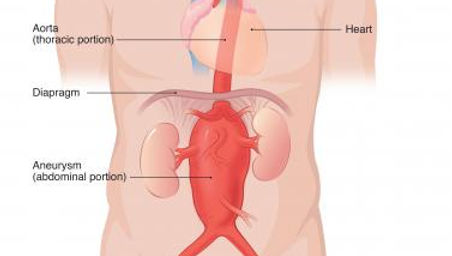
An aneurysm is defined as a pathologic dilation of a segment of a blood vessel. When the wall of a blood vessel weakens, a balloon-like dilation called an aneurysm sometimes develops.
Is family history important in AAA?
Aneurysms run in families. If a first-degree relative has had an AAA, you are 12 times more likely to develop an abdominal aortic aneurysm.
What are the treatment options available for AAA?
Statins are indicated to reduce the risk of cardiovascular events related to atherosclerosis. Operative repair of the
aneurysm with insertion of an aortic stent graft is indicated for abdominal aortic aneurysms of any size that are expanding rapidly or are associated with symptoms. For asymptomatic aneurysms, abdominal aortic aneurysm repair is indicated.
What are the types of AAA?
ccording to National AAA Screening Programme AAA is classified as:
3.0cms - 4.4cms = Small AAA
4.5cms - 5.4cms = Medium AAA
5.5+cms = Large AAA